
Chalazion and Eyelid Cyst Removal: Causes and Treatment
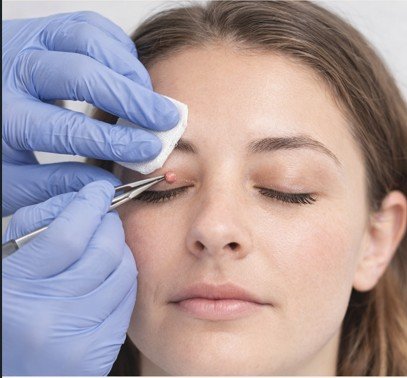
What Is a Chalazion?
A chalazion is a small, slow-growing lump that forms on the eyelid due to a blocked oil gland. It often appears as a painless swelling and may be mistaken for other types of eye lumps. Unlike infections, a chalazion develops gradually and is usually not tender to touch.
How a Chalazion Forms
The eyelids contain tiny oil-producing glands that help keep the eyes lubricated. When one of these glands becomes blocked, the oil builds up and forms a firm lump. This can lead to a noticeable bump, often referred to as a lump on eyelid with no pain.
Chalazion vs Stye: Key Differences
A chalazion is different from a stye. While a stye is caused by a bacterial infection and can be painful, a chalazion is typically painless and linked to inflammation rather than infection. Over time, some chalazia may require eyelid cyst removal if they do not resolve on their own.
What Is an Eyelid Cyst?
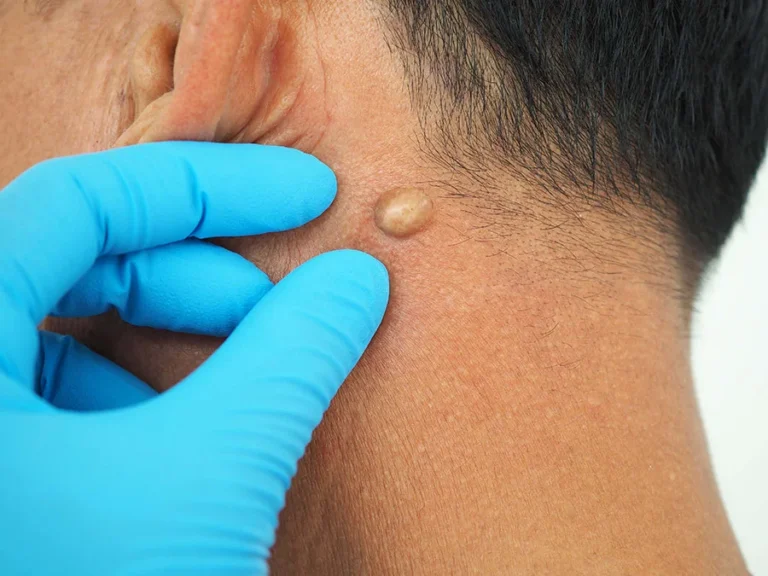
An eyelid cyst is a fluid-filled or solid lump that develops on or around the eyelid. These cysts can vary in size and may appear either on the surface or as a cyst under eyelid tissue.
Types of Eyelid Cysts
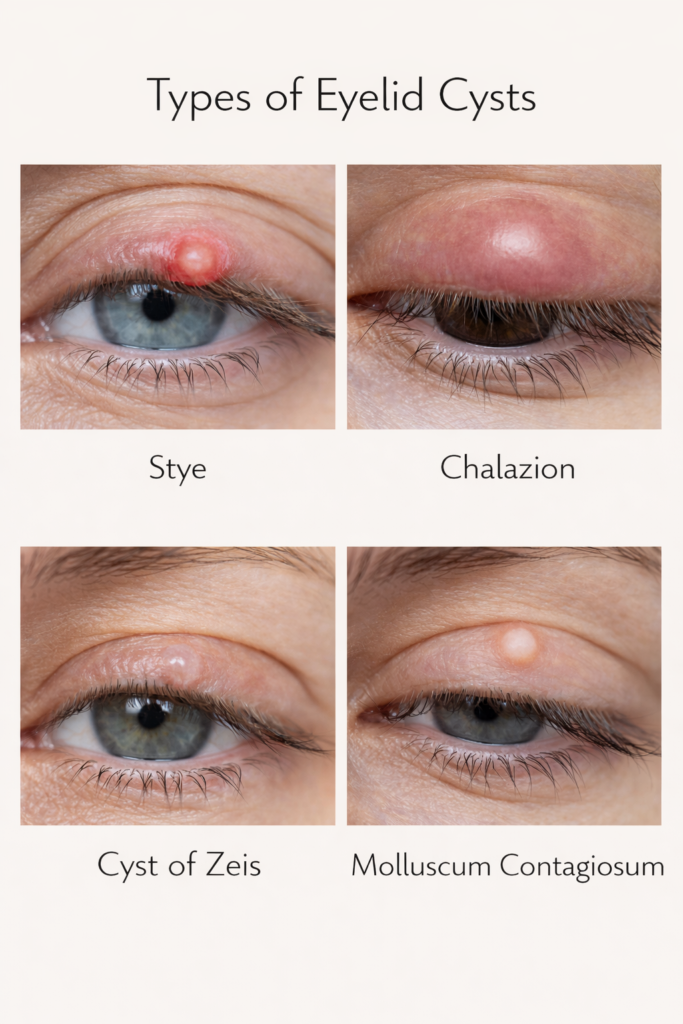
There are several types of eyelid cysts, each developing in different ways but often appearing similar. Many people simply describe them as an eye lump, especially in the early stages.
Chalazion
A chalazion is one of the most common types of eyelid cysts. It forms when an oil gland becomes blocked, leading to a painless lump on the eyelid. It tends to grow slowly and may require eyelid cyst removal if it does not resolve naturally.
Sebaceous Cyst
A sebaceous cyst develops due to trapped sebum beneath the skin. These cysts are usually smooth, round, and can appear on or around the eyelid. They are generally harmless but may persist without treatment.
Inclusion Cyst
Inclusion cysts form when skin cells become trapped under the surface. These are typically small, white or yellowish bumps that can appear on the eyelid. Although they are not usually painful, they may become noticeable over time.
Cyst Under Eyelid vs Cyst on Eyelid
A cyst under eyelid skin may feel deeper and less visible, while a cyst on eyelid is usually more noticeable. In rare cases, people may confuse these with a cyst on eyeball, although true cysts on the eyeball are uncommon and require specialist evaluation.
When these cysts persist, eyelid cyst removal may be considered to prevent discomfort or cosmetic concerns.
Common Causes of Eyelid Cysts and Chalazion
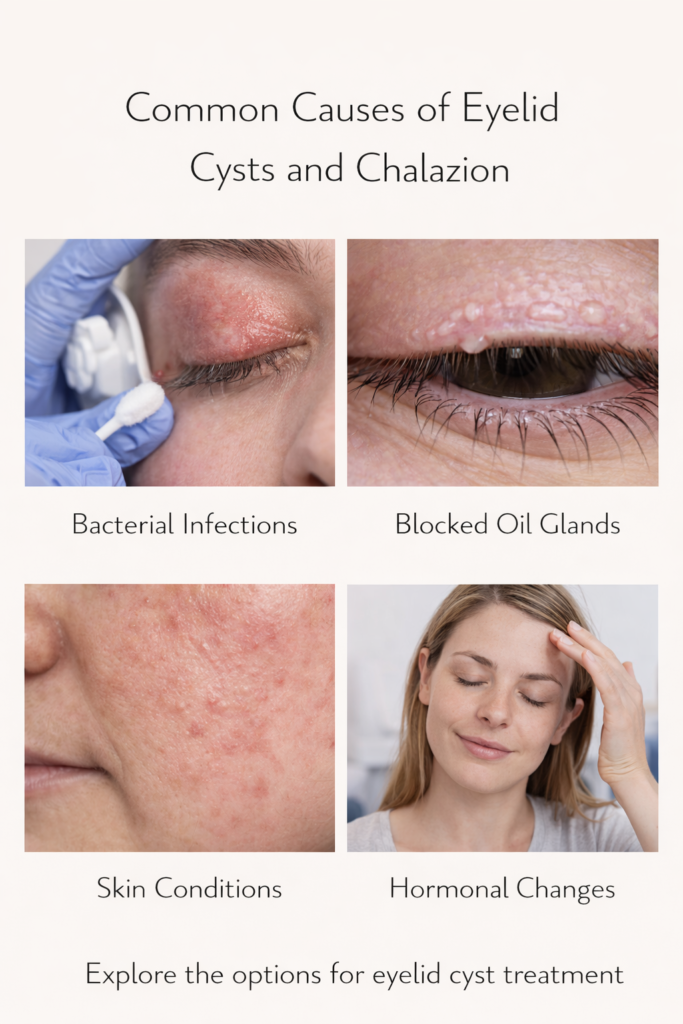
Understanding the causes of eyelid cysts can help reduce the chances of recurrence. Most cases are linked to gland blockage or skin-related conditions.
- Blocked Oil Glands
The most common cause is a blockage in the meibomian glands. When oil cannot drain properly, it accumulates and forms a lump, leading to conditions like chalazion.
- Infections and Inflammation
Although a chalazion is not an infection, inflammation can play a role. Chronic irritation or untreated styes can increase the risk of developing cysts.
- Skin Conditions Linked to Eye Lumps
Conditions such as blepharitis or acne rosacea can contribute to repeated eyelid cyst formation. These conditions affect oil production and increase the likelihood of developing an eye lump that may eventually need eyelid cyst removal.
Symptoms of a Chalazion or Eyelid Cyst
Eyelid cysts and chalazion often present with mild and manageable symptoms, but recognising them early is important.
- Lump on Eyelid With No Pain
One of the most common signs is a painless swelling or lump on eyelid. It may start small and gradually increase in size. The area may feel firm but not tender.
- When Symptoms Become Severe
In some cases, the lump can grow large enough to press against the eye, causing blurred vision or discomfort. Redness and swelling may also occur if inflammation increases.
If symptoms persist or worsen, eyelid cyst removal may be recommended to restore comfort and prevent further complications.
Can an Eyelid Cyst Go Away on Its Own?
Many eyelid cysts, especially small chalazia, can resolve without medical intervention. The body may gradually reabsorb the trapped oil, leading to a reduction in size over time.
Applying warm compresses regularly can help speed up this process. Gentle heat encourages the blocked gland to open, allowing the oil to drain naturally. Maintaining good eyelid hygiene can also support healing.
However, not all cysts disappear on their own. Some may remain unchanged for weeks or even months. In such cases, the lump may become a persistent eye lump that does not respond to home care.
When a cyst does not improve or begins to interfere with vision or comfort, eyelid cyst removal becomes a suitable option. Seeking professional advice ensures the correct diagnosis and treatment approach.
When Is Eyelid Cyst Removal Needed?
Eyelid cyst removal is not always necessary, but there are situations where treatment becomes important.
Signs You Should Seek Treatment
If the cyst continues to grow, causes discomfort, or affects your vision, it is advisable to seek medical advice. Recurrent cysts or multiple eye lumps may also require evaluation.
Risks of Ignoring an Eye Lump
Leaving a cyst untreated can sometimes lead to complications such as increased swelling or pressure on the eye. Although rare, persistent lumps should always be assessed to rule out other conditions.
Timely eyelid cyst removal can prevent these issues and provide long-term relief.
Eyelid Cyst Removal: Treatment Options Explained
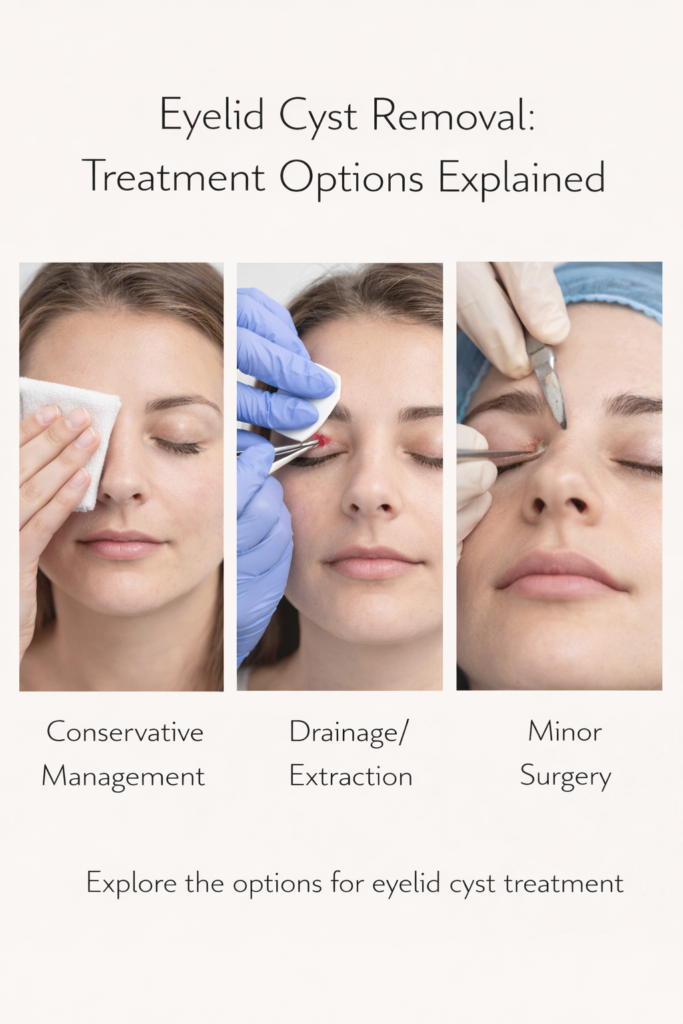
There are several approaches to managing eyelid cysts, depending on their size and severity.
Home Remedies and Warm Compress
Warm compresses are often the first step. Applying heat for 10–15 minutes several times a day can help reduce the cyst.
Medical Treatments
Doctors may prescribe medications or recommend minor procedures to reduce inflammation. These treatments are usually quick and effective.
Minor Surgical Removal Procedure
In cases where the cyst does not resolve, a simple procedure may be performed. Eyelid cyst removal involves draining the contents of the cyst under local anaesthetic. The procedure is usually quick, with minimal discomfort.
What to Expect During Eyelid Cyst Removal
Eyelid cyst removal is a straightforward procedure typically carried out in a clinical setting. The area around the eyelid is numbed using a local anaesthetic to ensure comfort throughout the process.
A small incision is made to drain the cyst, and the contents are carefully removed. The procedure usually takes less than 30 minutes and does not require a hospital stay.
Patients may feel slight pressure during the procedure, but pain is minimal. After the cyst is removed, the area is cleaned and sometimes covered with a small dressing.
Understanding the process can help reduce anxiety and ensure patients feel prepared for eyelid cyst removal.
Recovery After Eyelid Cyst Removal
Recovery from eyelid cyst removal is generally quick and uncomplicated. Most people return to their normal routine within a few days.
Healing Timeline
Mild swelling or bruising may occur initially but usually settles within a week. The eyelid gradually returns to its normal appearance.
Aftercare Tips
Keeping the area clean and avoiding eye makeup for a few days can help prevent infection. Following aftercare advice ensures proper healing and reduces the risk of recurrence.
Regular hygiene and monitoring can help avoid future eye lumps or cyst formation.
How to Prevent Chalazion and Eyelid Cysts
Preventing eyelid cysts involves maintaining good eye hygiene and addressing underlying conditions.
Cleaning the eyelids regularly helps remove excess oil and debris that can block glands. Using gentle, eye-safe cleansers can reduce the risk of developing a cyst under eyelid areas.
Managing skin conditions such as blepharitis also plays a key role. Avoiding touching or rubbing the eyes unnecessarily can further reduce irritation.
Simple daily habits can go a long way in preventing chalazion and reducing the need for eyelid cyst removal in the future.
Concerned about an eyelid cyst or persistent chalazion?
At Eldon Aesthetics & Skin Surgery Clinic in Newcastle upon Tyne, our experienced medical team offers expert assessment and safe treatment options for eyelid cyst removal in Newcastle Upon Tyne. If you have a lump on your eyelid that isn’t improving, seeking professional advice can help you find the most suitable next steps with confidence.
Frequently Asked Questions About Eyelid Cysts and Chalazion
- Are eyelid cysts dangerous?
Most eyelid cysts are harmless and do not pose serious health risks.
- Can a chalazion turn into something serious?
In most cases, it remains benign, but persistent lumps should be checked.
- Is eyelid cyst removal painful?
The procedure is usually performed under local anaesthetic, making it comfortable.
- How long does recovery take?
Recovery is typically quick, with most people healing within a week. - What causes a chalazion to form?
A chalazion forms when an oil gland in the eyelid becomes blocked. This leads to a buildup of oil, creating a firm, painless eye lump over time.
- Does makeup cause eyelid cysts?
Poor-quality or expired makeup can block glands and increase the risk of developing a cyst under eyelid areas.
- Can eyelid cysts come back after removal?
Yes, recurrence is possible, especially if underlying causes like blocked glands or skin conditions are not managed.
- How long does an eyelid cyst last?
Some cysts resolve within a few weeks, while others may persist for months if not treated.